
Friday, May 22, 2009
Today for science, I built some elements. Elements are basic materials that can't be broken down any further. All other materials are comprised of elements, just like all elements are comprised of atoms. I have made models of what the atoms of the elements would look like. John Dlaton was a very important person in this discover, and he rightly claimed that all materials consist of atoms and that, in most materials, different types of atoms are bonded together. Each element's combination of molecules is different, and has a distinct shape. Below, I have built a model of some element's molecules.


Monday, May 18, 2009
Science Experiment-Rusting
For science a few days ago, I rusted some metal. It was almost exiting as the time I grew some weeds! ;D I took some steel wool, put it in a bowl, poured some water over it, then let it sit for a few days. Although the experiment was very simple, the conept behind oxidation is very complex. Early scientists believed that rust was actually the metal burning, just at a slow speed. He thought that the rust was the residue left behind when all of the "phlogiston" burned away. Now, we know that rust is actually the chemical reaction between iron particles and air. Below, I have uploaded some pictures of the rusted steel wool.


Friday, May 1, 2009
Science Experiment-Flying!
For science today, I built a model airplane. I used cardboard, glue, a fastener, a plastic propeller, and a rubber band. As you probably guessed from the materials, it was rubber-band powered. In 1899, Orville and Wilbur Wright started experimenting with flying machine. Four years after they started experimenting, they became the first humans to perform a controlled, powered flight. Today, the plane that I built was a simple toy, but it demonstrated some of the most important theories and laws in flight. I was able to get it to fly for several, feet, before it would nose-dive and destroy itself on the nearest hard surface.
The first step in building the plane was to assemble the fuselage. I folded the perforated piece of cardboard from my kit into a triangular tube. This would be the main part of my aircraft. After the fuselage dried, I worked on creating the rudder assembly. This consisted of three small pieces of cardboard. When these were all glued together and done drying, I glued them, along with the main wing, onto the fuselage. After I had let it dry, it was time to start flying!
The first flight attempt failed miserably. The plane would fly for about 3 feet, then abruptly nosedive into the ground. It did this several times, and once knocked the propeller out of it’s socket. I tried attaching several coins to the front of the plane, just behind the propeller. This dramatically improved the performance of it, and stabilized it’s flight. It would go much farther now, around 20 feet.
I’ve built thousands of paper and rubber-band airplanes. It never gets old, though. It’s always amazing how you can turn come cardboard, a propeller, and a rubber band into something that can fly. Below, I have some pictures of my plane on the ground, and some slightly photoshopped pictures of it in the air.

The first step in building the plane was to assemble the fuselage. I folded the perforated piece of cardboard from my kit into a triangular tube. This would be the main part of my aircraft. After the fuselage dried, I worked on creating the rudder assembly. This consisted of three small pieces of cardboard. When these were all glued together and done drying, I glued them, along with the main wing, onto the fuselage. After I had let it dry, it was time to start flying!
The first flight attempt failed miserably. The plane would fly for about 3 feet, then abruptly nosedive into the ground. It did this several times, and once knocked the propeller out of it’s socket. I tried attaching several coins to the front of the plane, just behind the propeller. This dramatically improved the performance of it, and stabilized it’s flight. It would go much farther now, around 20 feet.
I’ve built thousands of paper and rubber-band airplanes. It never gets old, though. It’s always amazing how you can turn come cardboard, a propeller, and a rubber band into something that can fly. Below, I have some pictures of my plane on the ground, and some slightly photoshopped pictures of it in the air.

Tuesday, April 28, 2009
Stress Test-Science Experiment


For my Science project on Monday, I learned about different building materials. To do that, I build two slabs of plaster. One was just plaster, and the other had wire running through it, in a crisscross pattern. The wire would supposedly make the plaster much stronger, with the ability to flex without breaking. You can see a picture of reinforced concrete below.

You can see the iron bars lacing through the cement.
After I had made the two plaster blocks, I set them up like a bridge in between two containers. Next, I set a cup on top of the unreinforced plaster. I then filled it up with water, a cup at a time. Once I had filled the cup with 5 and 1/2 cups, the plaster shattered, making a huge mess. After I had cleaned that up, I put the reinforced plaster block over the same spot. The reinforced plaster took over 7 cups of water, and a several pound piece of slate before it finally broke. This experiment showed how the strength of a material can be greatly improved by lacing it with wire, or a similar material. This technique was invented by Joseph Monier, who origionally invented it to improve the strength of his garden beds and pipes.
You can see some videos and pictures of the experiment below.
Wednesday, April 1, 2009
Science Unit Summary
Summary of Ancient Scientist Unit Study
For my science unit this year, I have been learning about ancient scientists. I read background information about the scientist, do experiments related to their discoveries, and write about my findings in my blog. Below, I am going to give a short summary of what I have done so far.
I am doing experiments out of a science book called "Milestones in Science". The book groups scientists by their fields, and then chronologically within each one. So far, I have studied "Light, Colors, and Sound", "Heat, Steam, and Engines", "Magnetism and Electricity", and "Force". To start off with, I read a short description of the scientist in the manual. It includes their most famous achievements, when and where they were born, and how their achievements helped mankind. After I have read their summary, I learn more about the scientist from their biographies, or by reading about them in the one and only online encyclopedia. After I have read about them, I conduct and experiment based on their discoveries.
The experiment is always based on one of the scientist's own experiments, or one of the theories that they are famous for. The complexity of the experiment ranges anywhere from filling a cup with water (Newton's third law of motion) to building my very own Camera Obscura, (demonstrating some basic principles of light and how they can be used.) The experiment usually has several steps, and several different parts. Each section usually shows that the same principal/theory can influence many different areas. For example, when I learned about Isaac Newton, I did several experiments all proving his laws of motion. The average number of experiments per scientist is about three.
After I have researched the scientist, I write a blog entry, and make a timeline card. On my blog, I talk about the experiments I did that day, and what scientist I learned about. (You can view my blog at kaiindvik.blogspot.com) I tell what the experiments proved/disproved, and how the scientist made a contribution to humanity. I almost always take pictures of my experiments, and sometimes film a video of them in action. After the blog post is done, I make a timeline entry. I give information like when and where the scientist was born, and his most important achievements. The timeline cards are on display now.
For my science unit this year, I have been learning about ancient scientists. I read background information about the scientist, do experiments related to their discoveries, and write about my findings in my blog. Below, I am going to give a short summary of what I have done so far.
I am doing experiments out of a science book called "Milestones in Science". The book groups scientists by their fields, and then chronologically within each one. So far, I have studied "Light, Colors, and Sound", "Heat, Steam, and Engines", "Magnetism and Electricity", and "Force". To start off with, I read a short description of the scientist in the manual. It includes their most famous achievements, when and where they were born, and how their achievements helped mankind. After I have read their summary, I learn more about the scientist from their biographies, or by reading about them in the one and only online encyclopedia. After I have read about them, I conduct and experiment based on their discoveries.
The experiment is always based on one of the scientist's own experiments, or one of the theories that they are famous for. The complexity of the experiment ranges anywhere from filling a cup with water (Newton's third law of motion) to building my very own Camera Obscura, (demonstrating some basic principles of light and how they can be used.) The experiment usually has several steps, and several different parts. Each section usually shows that the same principal/theory can influence many different areas. For example, when I learned about Isaac Newton, I did several experiments all proving his laws of motion. The average number of experiments per scientist is about three.
After I have researched the scientist, I write a blog entry, and make a timeline card. On my blog, I talk about the experiments I did that day, and what scientist I learned about. (You can view my blog at kaiindvik.blogspot.com) I tell what the experiments proved/disproved, and how the scientist made a contribution to humanity. I almost always take pictures of my experiments, and sometimes film a video of them in action. After the blog post is done, I make a timeline entry. I give information like when and where the scientist was born, and his most important achievements. The timeline cards are on display now.
Friday, March 27, 2009
MORE PHYSICS!!!
I continued on my physics unit today, and learned about Isaac Newton. He is the man credited with discovering the relation between mass and inertia, acceleration, and three laws of motion.


Today, I did three experiments, all related to his laws of motion. The first one explained that "The change in motion of a body is proportional to the strength and direction of the applied force", which is Newton's second law of motion.
First, I attached a bungee cord to a cup, and measured how long the bungee cord stretched.
It was 5 1/4 inches. Next, I added 25 ml of water. The bungee cord extended to 5 3/8 inches. I added 25 more m of water. The bungee cord extended to 5 1/2 inches. Finally, I added another 50 ml, totalling 100 ml of water. The bungee cord measured 6 inches, 3/4 inches longer then it started.
This simple experiment proves that the more force that is applied to an object, the greater the force of the reaction will be.
You can see some pictures of it below. (You can't really tell the difference between them, but when I measured it, there was definitely a change in the bungee cord.)


For my second experiment, I did one that showed friction in action, and how it interacts with other forces. Newton's first law of motion states "A body persists its state of rest or of uniform motion unless acted upon by an external unbalanced force." For the experiment I conducted today, I first took a coin and put it on a piece of paper. Next, I placed the paper over a cup so the coin was directly above the opening, but on top of the paper. If I pulled the paper slowly, the coin would move with it. However, if I jerked it quickly, then the coin would stay in place, and fall into the cup. I took a video of it, which I have posted below.
When I pull the paper slowly, the friction in between the coin and the paper is greater than the coin's inertia, which results in the coin moving along with the paper. However, when I pull the paper quickly, the force of me pulling the paper is greater than the force of the friction, and the coin stays where it was, dropping into the cup. This is proving Newton's first law of motion.
You can learn more about this here.
For my third and final experiment, I conducted a very interesting one. It involved Newton's third law of motion, which is "To every action there is an equal and opposite reaction."
There is an interesting invention, called Newton's Cradle, which demonstrate's this law. It works because the force of one ball striking the group is enough to move a ball equal to it's own weight. Also, the force of two balls is enough to move two balls, equal to their own weight, and so on and so forth.
I made a simple version of this, involving marbles and a box. You can see a video of a large Cradle below.
Friday, March 20, 2009
Physics!!!!
Today, I started a new unit in my science projects. Now, I'm learning about force and the way it acts on objects. I did a very simple experiment today on friction. Friction is a force that acts in the opposition to the force of motion, and thus acts like a brake on movement. The following experiment shows how friction can be reduced.


First, I wrapped a rubber band around a book, and attached a bungee cord to it. I then measured the length of the bungee cord with no tension on it. It was 11 in. Then, I stretched the bungee cord until the book began to move. I measured how far this was. This measurement was 16 inches. Next, I put down skewers on the table, and put the book on top of that. This time, when I dragged the book, the bungee cord did not stretch at all, and it was much easier to move the book. This works because the friction in between the book and the skewers is significantly less then the friction between the book and the table.
This method was used by the Egyptians to contruct buildings, especially the pyramids.
You can see a picture of it below.
For my second experiment, I investigated Galileo's Law of Falling Bodies. People used to believe that objects fall at a constant rate, in relation to their weight. Galileo proved, however, that objects accelerate, and their speed has nothing to do with their weight. He used an inclined plane to prove this, and I did a similar experiment. I put some books under one end of a coffee table, to give it a slant, then taped down some pieces of string about 20 CM apart. Next, I rolled a marble down the table, across the strings. You could hear it clicking as it bumped over each string. The interesting thing is, the clicks became close and closer together. This proves that the marble is accelerating. I recorded this sound, and I have posted an image of the waveform below.

You can see that each click getting closer and closer together. Also, I have uploaded a picture of the whole setup below.

The second part to this experiment was to try to set the strings the right distance apart so the marble made a consistant clicking sound.
I uploaded the waveform of this experiment, and the picture of the sting setup, as well.


Friday, March 13, 2009
Magnetism
Today for science, I learned about magnetism, and it's relation to electricity. I also built some pretty awesome experiments, which I'm going to write about now.


The first one I made was a simple experiment about how magnetic fields could be created with electricity. A guy named Hans Christian Oersted is credited with inventing it. Basically, I am turning a wire into an electromagnet, which the compass is attracted to. You can see a video of it below.
My second experiment was creating a Galvanometer.
This is essentially a device that detects electricity. I made this by wrapping over 2 meters of wire around a compass. When a charge was applied, the needle would swing violently to one side. You can see some pictures of it below.
My third and final experiment was creating a model based off of an experiment of Michael Faraday. I wound a LOT of wire around a bar magnet, and then applied a charge to it. A nearby compass would swing around and point at it. I had created my own electromagnet. My electromagnet behaves just like a regular one, but I can switch it on and off like a light. You can see a few pictures of it below.


Friday, February 27, 2009
Magnetism
Today, I went on to the next unit in my science study. Now, I'm learning about magnetism and electricity. For my first experiment, I made a simple compass. Compasses have been in use for thousands of years, and evolved much since their first iteration. Although little is known about it's origins, Flavio Gioia, an inventor from the Italian town of Amalfi, is credited with inventing the compass. Nothing else is known about the early days of the compass, other than the ancient Chinese used a needle compass in navagation, by about 1000 AD. Today, though I built one based on the original design used in navigation. It was actually very simple. First, you take a magnet, (in my case, a bar magnet) and put it in a bottlecap. Then you just have to put it floating in a bowl of water. The magnet automatically points north.. Here, I have some pictures of it in action.


Friday, February 20, 2009
Science Day
Today I went to a science day at Cal Poly. We did biology, chemistry, and engineering.
For Biology, we learned about how taste buds work, and how they can be controlled. In chemistry, we learned about molecules, and how the molecular structure changes the smell/taste of an object. in engineering, we learned about sine waves, and how we can control the frequency of them, and make LEDs reflect the wavelength. My favorite was engineering, because it was the most in-depth, and they had a learn-by-doing theme.
Friday, February 6, 2009
James Watt
Today, I learned about James Watt. James Watt made the first efficient and widely used steam pump. Later he develped this technology into many different things that helped bring the world into the Age of Steam.
The main invention I was learning about today, though, was the steam pump. Before the steam pump, mining was very difficult at great depths. Water would leak into the mines, and stop mining completely. Other pumps were invented before Watt's, but they required huge amounts of fuel, and were not very efficient. After much work, and much adversity, James was able to invent a much more efficient steam engine, that was more reliable and stable. He did this by condensing the steam in a seperate chamber, instead of right in the main chamber, like earlier engines did. The full explination is too long to fit here, but maybe this wikipedia article can shed some light on it.
After Watt had created the steam engine, he continued making advancements in steam technology, including double-action engines, which made the steam engine twice as powerful. Watt is credited with bringing the world into the age of steam, and paving the way for many other advancements, including electricity.
Below, you can a picture of his steam pump.

Here is a picture of a model steam engine I made myself.

Thursday, January 22, 2009
Steam Power!
I did a short experiment on steam today, and how it can be used. This experiment was just showing how steam does have power, and the ability to do work.

The first experiment I did today was very simple. I boiled water in a pot, and then watched the pot lid clatter. It was lifted by the expanding water. Below, you can see a video of it.
My second experiment was a little more complicated, but it turned out very good.
First, I brought some water to a boil in a teapot. After it was steaming, I held a water bottle over the opening. When some steam collected in the bottle, I then put it upside-down in a pot of cold water. When the steam condensed, the water filled the bottle part way. (Note: normally, the air inside the bottle will keep the water out. However, if you fill the bottle with steam, it creates a vacuum, sucking some water in. See diving bell.)
You can see some pictures below.


Friday, January 9, 2009
Science Experiment
Today, I did two science experiments. The first one I did was about daguerreotypes. You can see a timeline entry for the inventor below:
===========================================
NAME: Luis Daguerre
BIRTH/DEATH: 1787-1851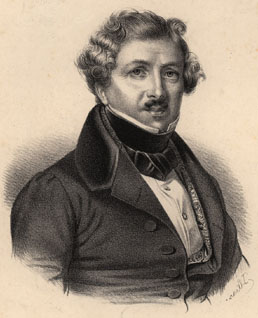


ACHIEVEMENTS: Daguerre invented the daguerreotype,
which was the first stable form of photography.
With the daguerreotype the image is exposed
directly onto a mirror-polished surface of silver
bearing a coating of silver halide particles deposited
by iodine vapor. This was the first kind of photography
that did not require hours of exposure.
=========================================
Today, I made a kind of a daguerreotype myself, exept with a glow in the dark star, and a table lamp.
I went into a dark room, (a closet) and put my thumb over part of the star. I turned on the lamp.
After a while, I turned off the lamp, and took off my thumb. i could see a clear imprint of it on the star!
I did this with several different objects, and took some pictures of them.
you can see these below.


The second experiment that I did involved filements.
(You know.......the glowy thing in light bulbs)
I looked at some through a magnifyng glass, and took some pictures.
I also learned a little bit more about how a filiment works, and who invented them.
As I'm sure you (should) know, the inventor of the light bulb is Thomas Edison.
He learned how to make the filiments burn longer, by encasing them in an airtight glass tube.
Not only that, but he had to invent his own method of powering it, and build everything.
There was nothing that he could start with; he had to build everything by himself.
The powerplant, the wires, everything!
Below, you can see some pictures of his invention.


Subscribe to:
Posts (Atom)